You are Receiving this Monthly Bulletin because you Care for the Environment

Launching PAD - Partnership, Act, Deliver for Net Zero

Message From Director's Desk

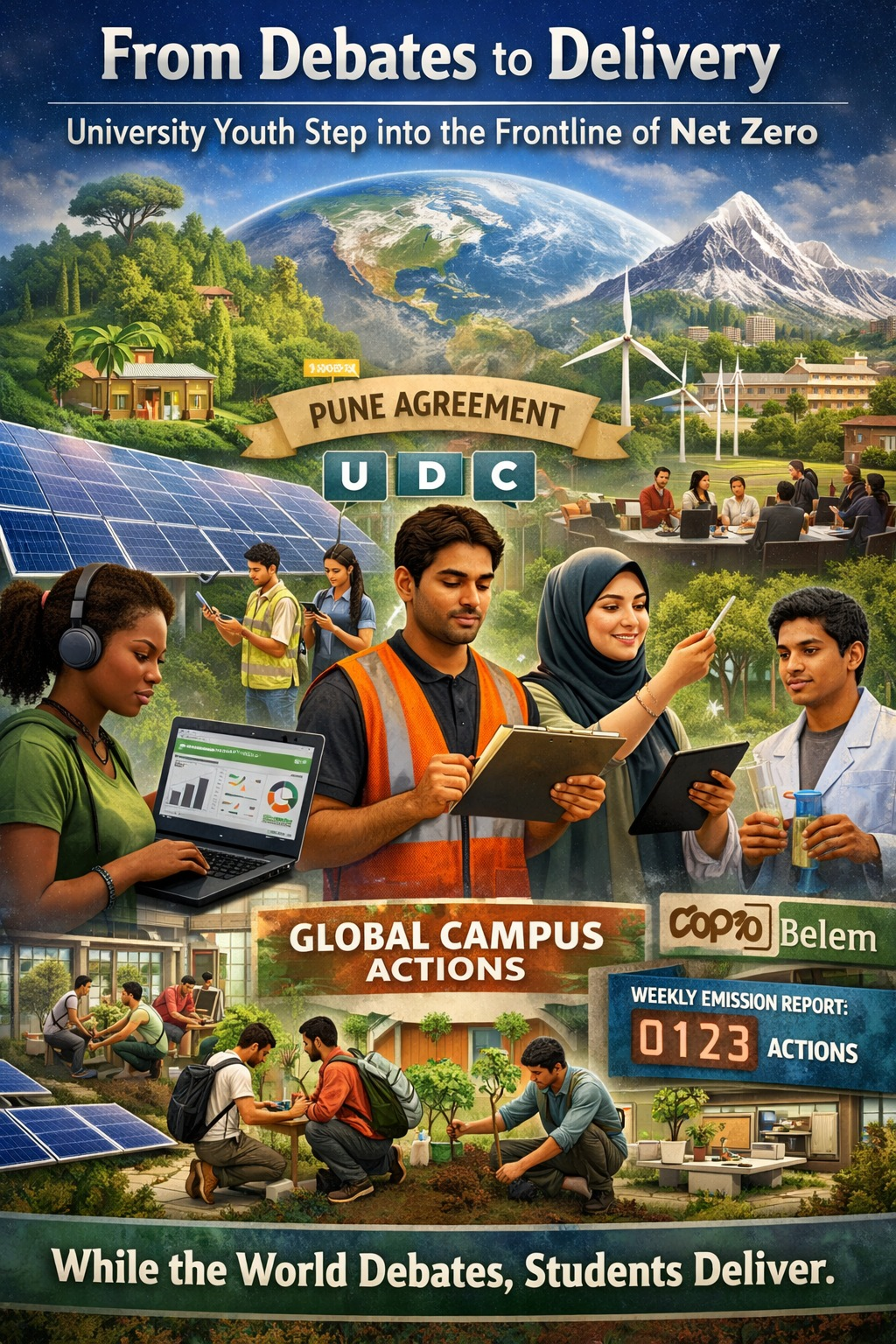
From Debates to Delivery

University Youth Step Into the Frontline of Net Zero

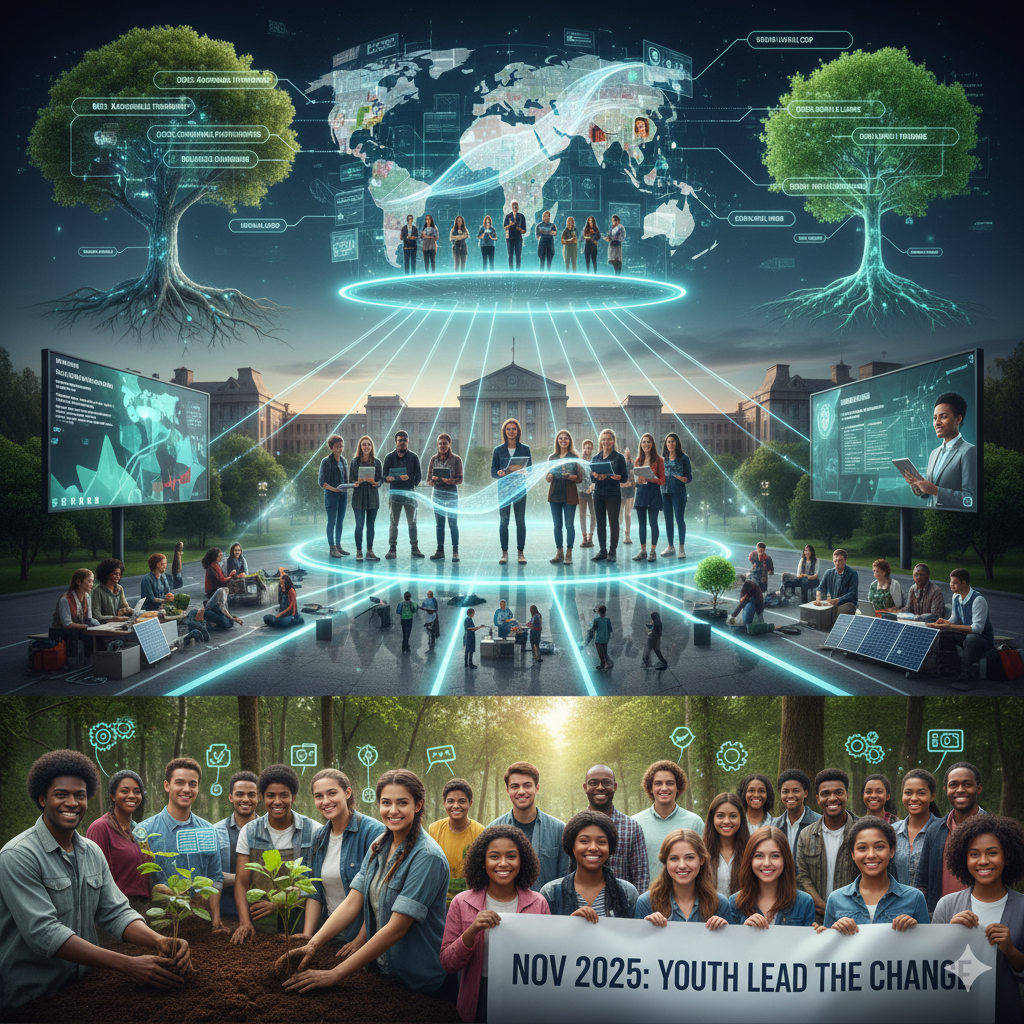
As the world argues over what COP30 truly achieved, a quieter but more powerful story is unfolding beyond the negotiation halls: university youth across continents are no longer waiting for global agreements — they are implementing Net Zero on the ground.

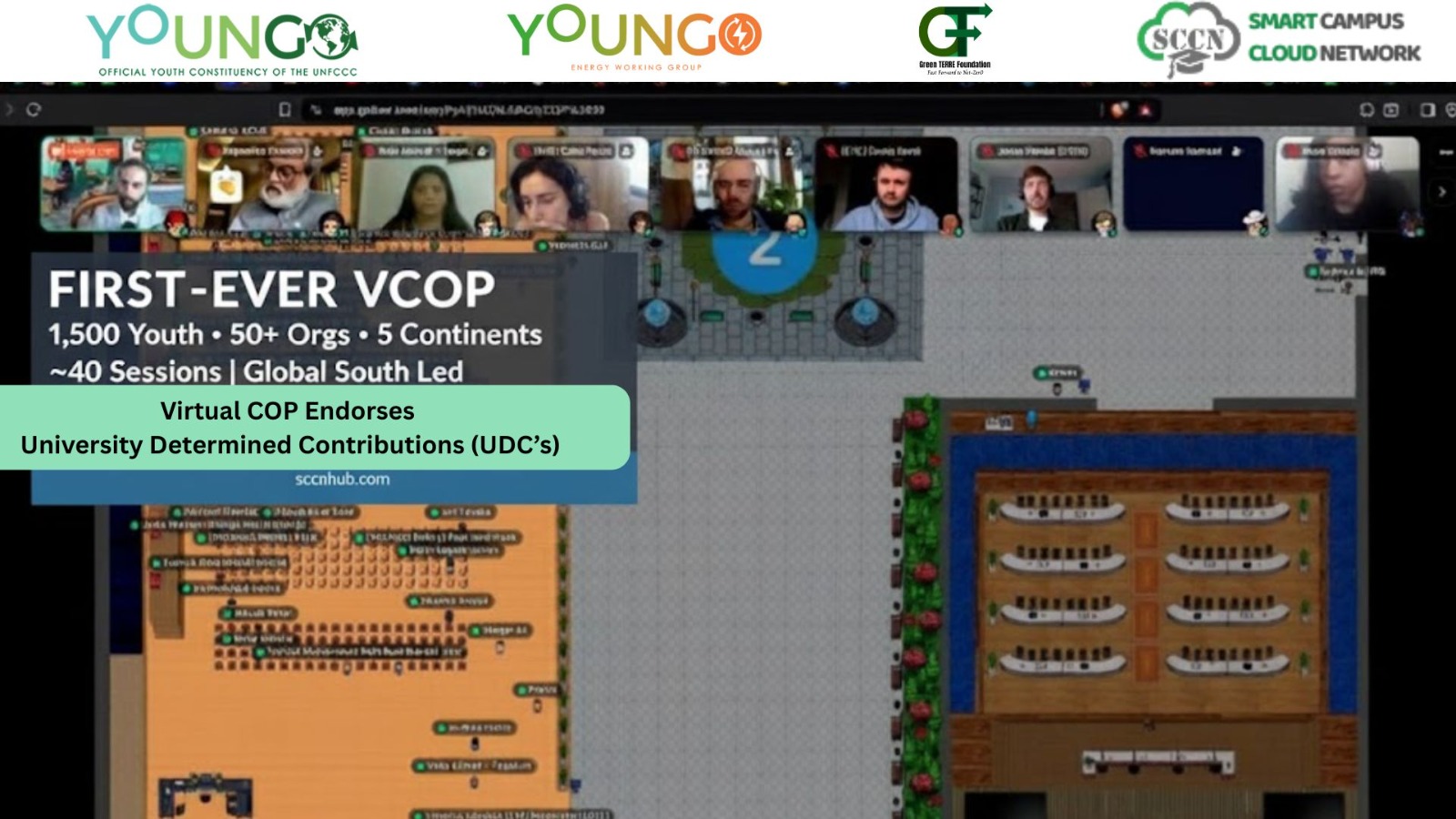
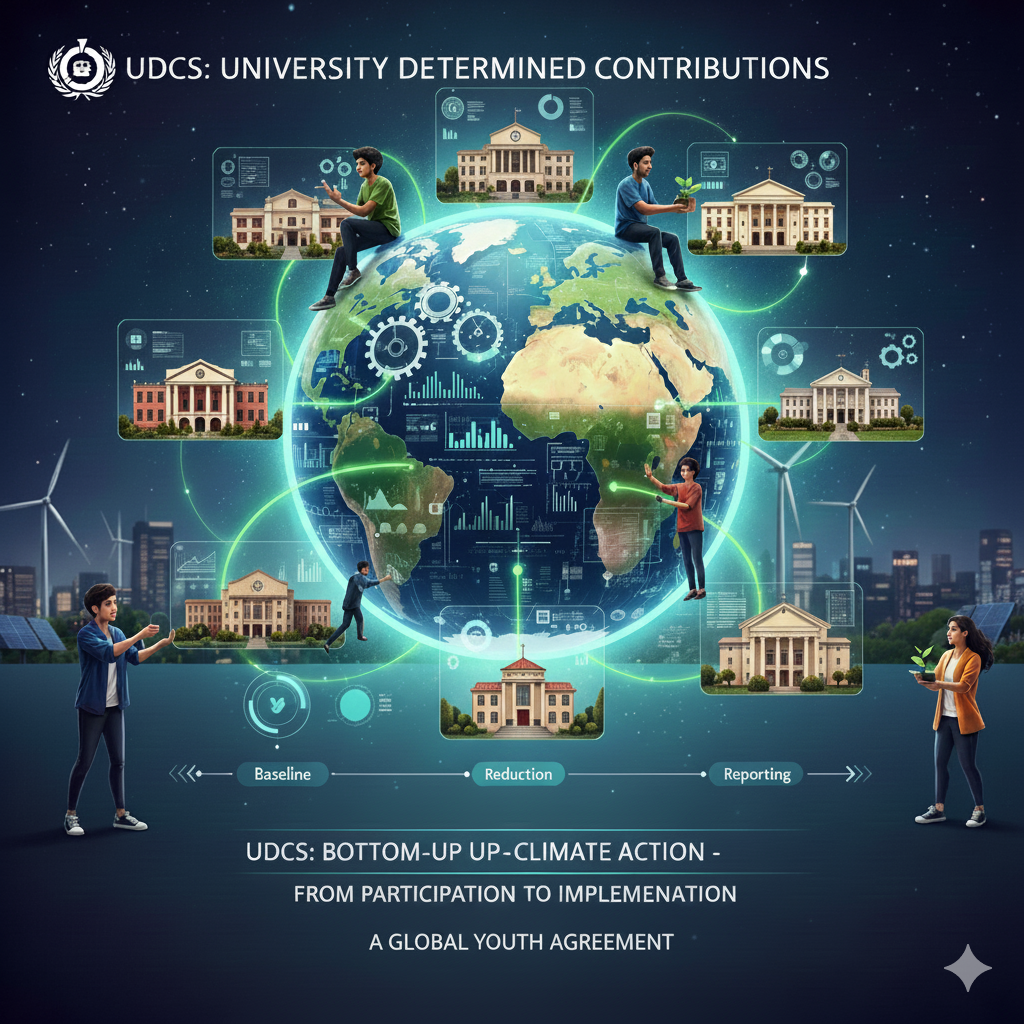
Firstly ,even  before COP30  first-ever virtual COP (v-COP) was held with youth leaders that delivered one of the year's most significant governance innovations: Pune Agreement, formalising University-Determined Contributions (UDCs),  as proposed by Pune-based as a global standard for bottom-up climate implementation. 1,500 young negotiators from five continents adopted this innovative process of UDC of making road-map for university campus to be Net Zero.

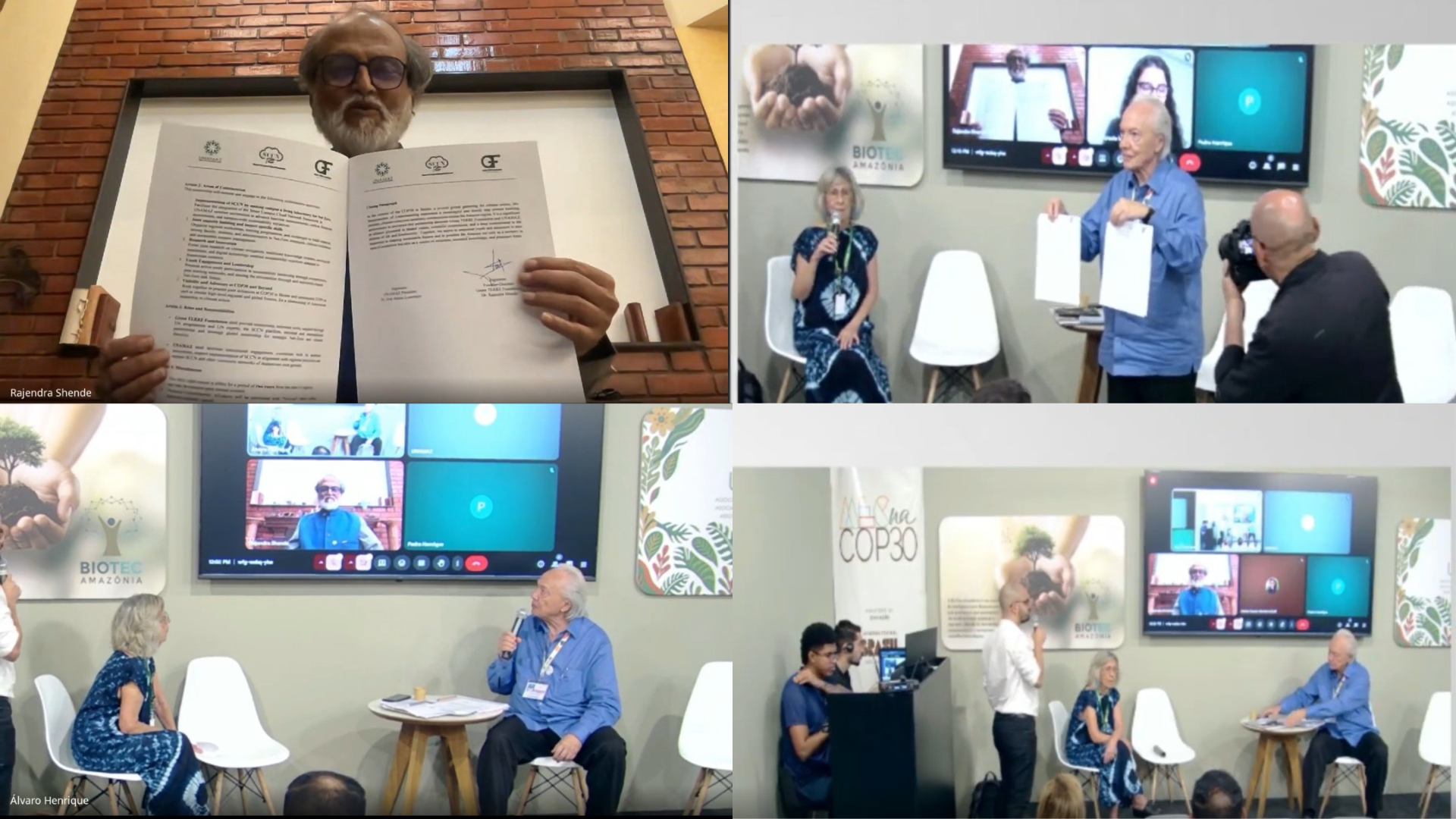
Secondly, while diplomats in Belém wrestled with negotiating texts, the Amazon–Himalaya climate bridge emerged through a landmark partnership between UNAMAZ ( Association of Amazonian  Universities and Green TERRE Foundation, uniting 64 Amazonian universities with 550+ global campuses to operationalize measurable climate action 

Above developments transform universities into “living-laboratories,” equipping students with green skills and positioning them as the world’s most vital climate workforce.


UDCs have given the message that strongly indicates  that students are not waiting for slow-moving policy — they are not only engaged in planning but also measuring emissions, reducing footprints, and reporting progress with transparency.

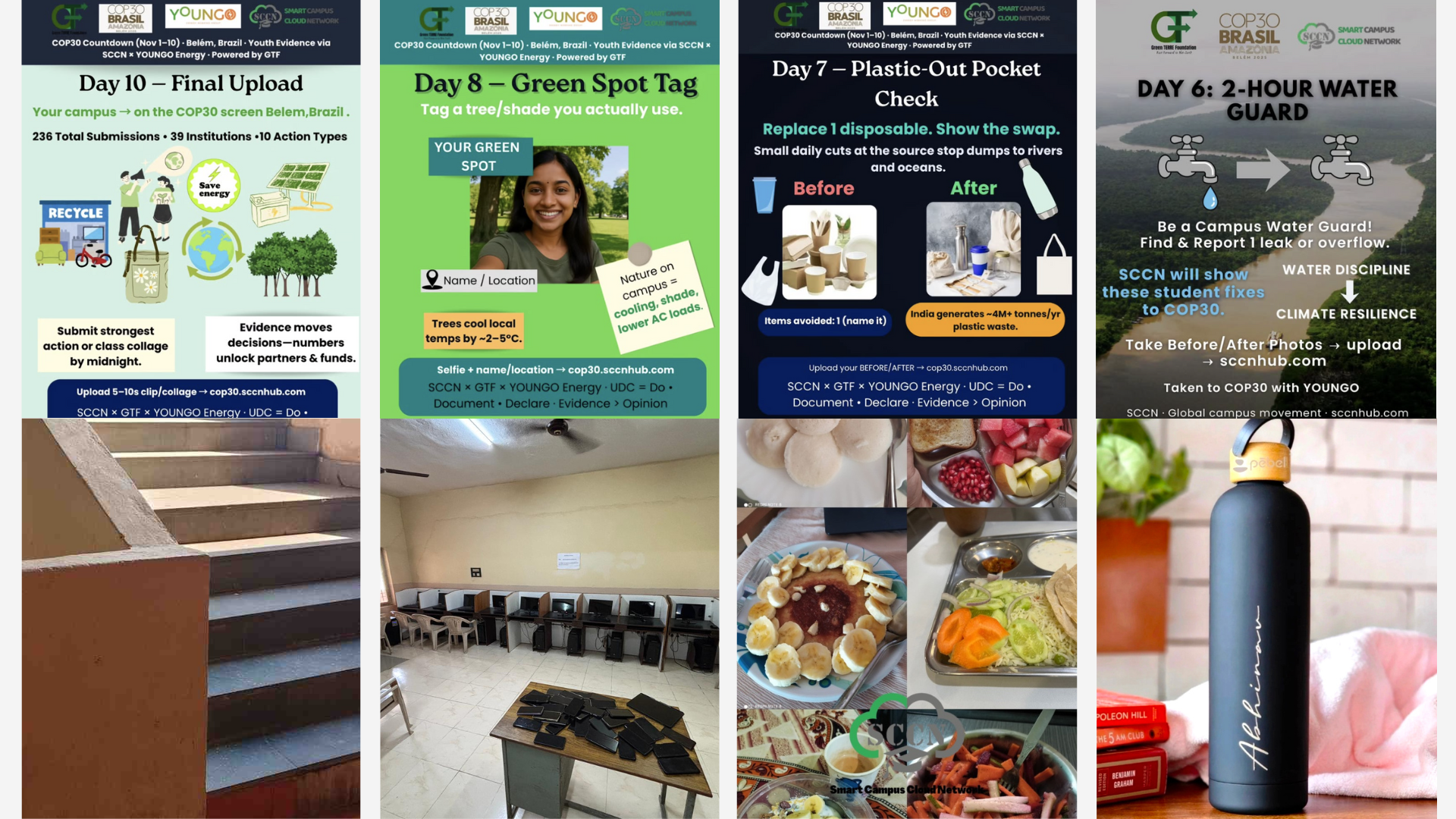
Even before COP30 began, youth had already launched a global countdown with hundreds of evidence-based campus actions, reinforcing that implementation—not intention—is the defining currency of climate credibility. ( Read : the World’s only Weekly compilation of the emission reduction stories in University Campus)

As negotiators debated the pace of progress, students across Africa, Asia, Latin America, and Amazonia demonstrated what progress actually looks like. Negotiators did not even set policies to bend the curve while Youth started  actions that bend curves, builds resilience, and closes the implementation gap that was signaled in Brazil’s own COP strategy of 3_Is Implementation, Innovation, Inclusion 

The message is unmistakable:
While the world debates outcomes, university youth have already begun delivering them.
By Dr Rajendra Shende


Virtual COP: A New Model of Climate Participation

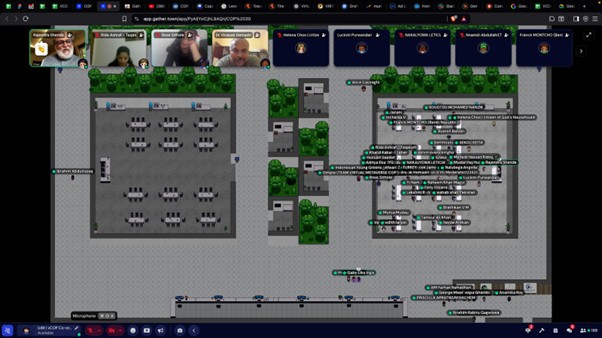
In November 2025, the Green TERRE Foundation and YOUNGO launched the world’s first Virtual COP, enabling 1,500 youth from five continents to negotiate climate policy without geographic or financial barriers. This culminated in the Pune Agreement, a landmark shift from climate activism to formal governance.

Key highlights of this evolution include:

  • The Virtual COP: A digital replica of UN negotiations allowing youth to participate on equal footing.

  • The Pune Agreement: A youth-led framework introducing University-Determined Contributions (UDCs) as a scalable climate mechanism.

  • COP30 Milestone: The agreement was showcased in Belém, Brazil, transitioning UDCs from a student initiative to a globally recognized governance model.

  • Implementation-Focused: Unlike symbolic protests, this model provides an evidence-based approach to Action for Climate Empowerment (ACE).

By formalizing UDCs at COP30, youth proved they are no longer just demanding change—they are designing the multilateral systems to deliver it.

Understanding UDCs — and Why They Are Transformative

UDCs are campus-level climate action commitments that:

  • are measured with real data,

  • are implemented by students,

  • follow a baseline → reduction → reporting cycle, and

  • create auditable, comparable evidence of progress.

They are inspired by Nationally Determined Contributions (NDCs) but operate from the bottom up — turning every university into a Net Zero living laboratory.

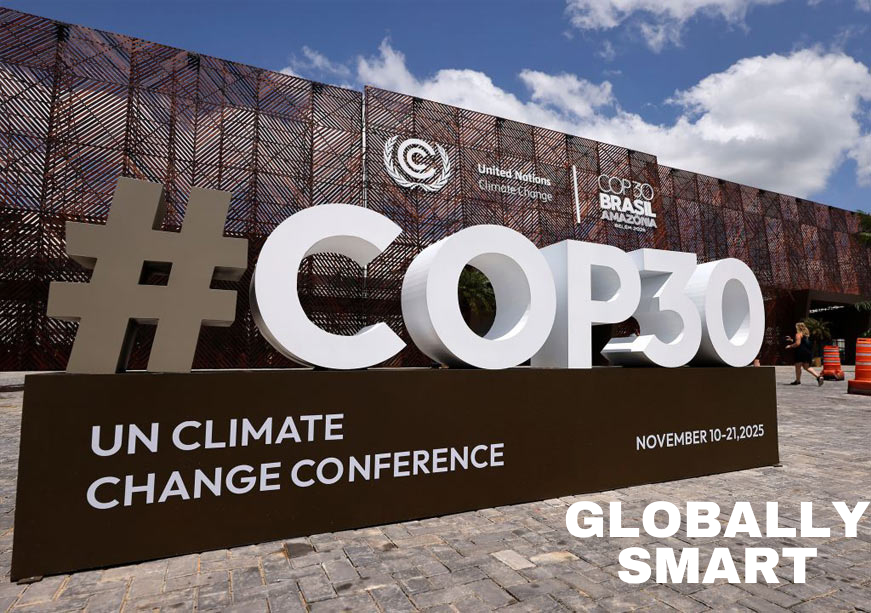
On 14 November 2025, YOUNGO Energy presented UDCs formally in the UNFCCC Children and Youth Pavilion. Culminating in its formal presentation at COP30 as an implementation-ready model for campus-based climate action. where campus-led climate action was presented as evidence that measurable reductions can precede and strengthen formal negotiations.

How UDCs became a voluntary global youth agreement:

  • Recognised in the Pune Agreement (Virtual COP outcome)

  • Adopted by youth worldwide as a standard for green skills

  • Formally presented at COP30 in the Children and Youth Pavilion

  • Supported by YOUNGO Energy for visibility across UNFCCC processes

UDCs mark a shift from “youth participation” to youth implementation.

Countdown to COP30 — When Youth Actions Spoke Louder than Negotiations

Before delegates arrived in Brazil for the 30th Conference of the Parties (COP30), GTF and YOUNGO Energy launched a 10-day global countdown, showcasing measurable climate efforts on campuses worldwide.

What this meant:

  • 241 youth submissions of real campus actions

  • 41 campuses sharing baselines, savings, and behavior changes

  • Demonstration that youth can deliver reductions, not just raise concerns

The message to global negotiators was unmistakable:
Climate ambition becomes credible only when backed by measurable action.

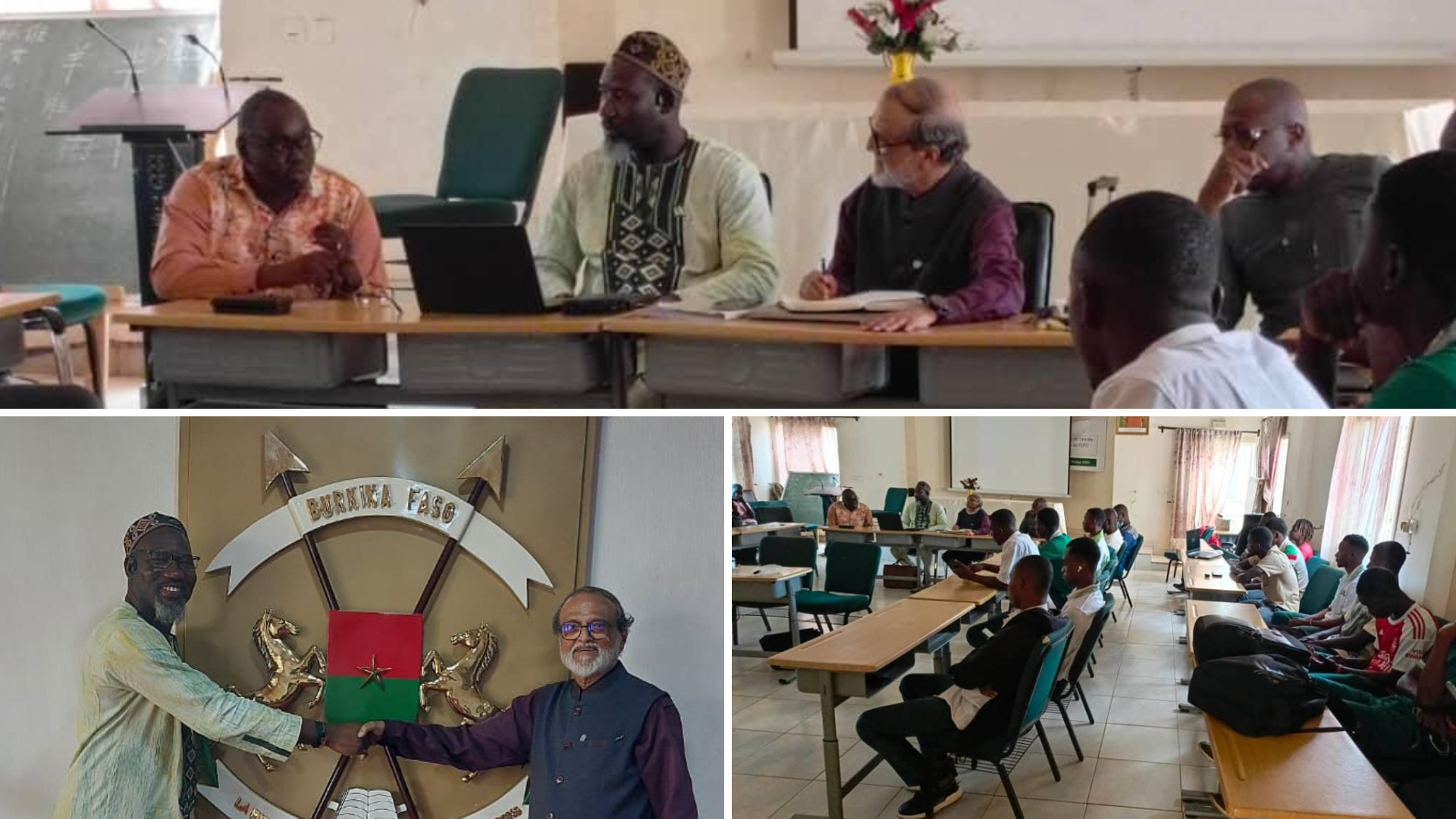
Implementation Over Negotiation — Dr. Rajendra Shende in Burkina Faso

While world leaders negotiated in Brazil, GTF Founder–Director Dr. Rajendra Shende chose to be on the ground in Burkina Faso — a country facing acute climate vulnerability despite minimal contribution to emissions.

At École Polytechnique de Ouagadougou, he observed:

  • Cold-chain improvements for reducing food loss

  • Vaccine cooling innovations

  • Youth-led energy audits and efficiency actions

Why this choice mattered:

It illustrated the paradox of COP30:
Negotiations define the direction.
Implementation defines the future.

Dr. Shende stood where life-saving change is already happening — affirming GTF’s commitment to bottom-up climate transition.

Amazon–Himalaya Alliance: GTF & UNAMAZ Sign Landmark MoU

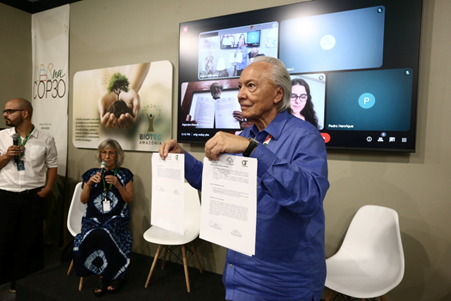
At the COP30 pavilion of the Association of Amazonian Universities (UNAMAZ), GTF signed a Memorandum of Understanding (MoU) with UNAMAZ, representing 92 universities across eight Amazonian nations.

This alliance links:

  • The Amazon basin

  • The Himalayan region

  • SCCN’s global network of 550+ campuses

Why this partnership matters:

Both regions:

  • carry some of the world’s largest youth populations,

  • face intense environmental pressures, and

  • hold irreplaceable ecological systems.

The MoU establishes a historic South–South higher-education coalition for Net Zero campuses, indigenous knowledge, research, and green skills.

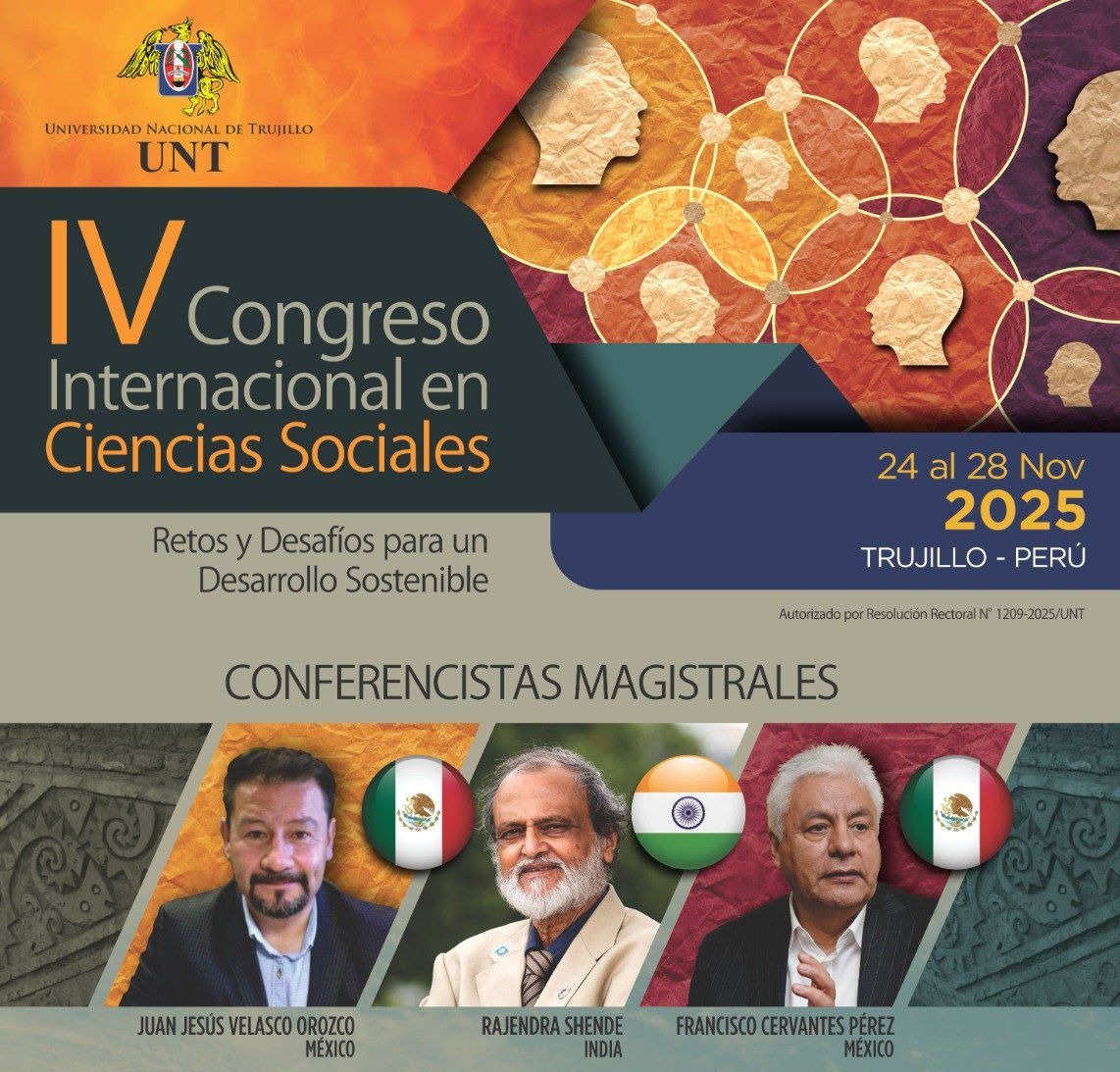
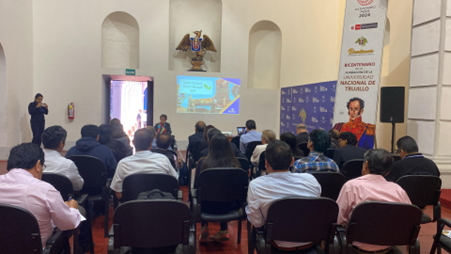
Peru: Dr. Shende’s Keynote on “Mining the Minds of Youth”

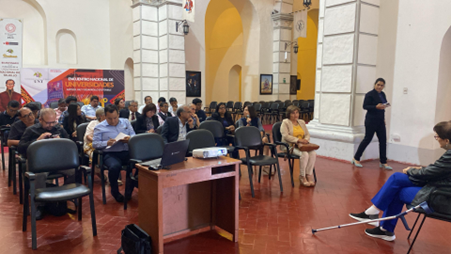
At the IV International Congress of Social Sciences hosted by Universidad Nacional de Trujillo (UNT), Peru, Dr. Shende delivered a keynote emphasising:

  • The global human-capital gap for Net Zero

  • The urgency of experiential learning

  • The role of campuses as climate laboratories

  • Youth as the backbone of future climate stability

His keynote reinforced a message echoed throughout November:
Net Zero is not only about emissions — it is about empowering the next generation to act.

November Was the Month of Real Implementation

COP30 produced slow and cautious political progress — a reminder of the limitations of negotiation-led climate governance.

But outside the negotiation halls, November 2025 saw something different:

  • a youth-written governance document,

  • an actionable climate framework (UDCs),

  • cross-continental South–South partnerships,

  • green-skill training in vulnerable regions,

  • a global virtual COP without borders,

  • and evidence-led youth action showcased on the COP stage.

November 2025 will be remembered as the moment when universities and youth moved from the periphery of climate discussions to the centre of climate implementation

Designed by:

Nexolve Technologies LLC

Curated by:

Ar. Durga Kamat, Project Leader, Green TERRE Foundation - SCCN

Dr. Riyaa ChandraPublic Health Expert

Conceptualized by:

Dr Rajendra Shende, Founder, Green TERRE Foundation - SCCN


Powered by:
GetResponse
#